Feasibility Study to Implement Hydrothermal Liquefaction in Southeast Michigan
Funding: U.S. Department of Energy
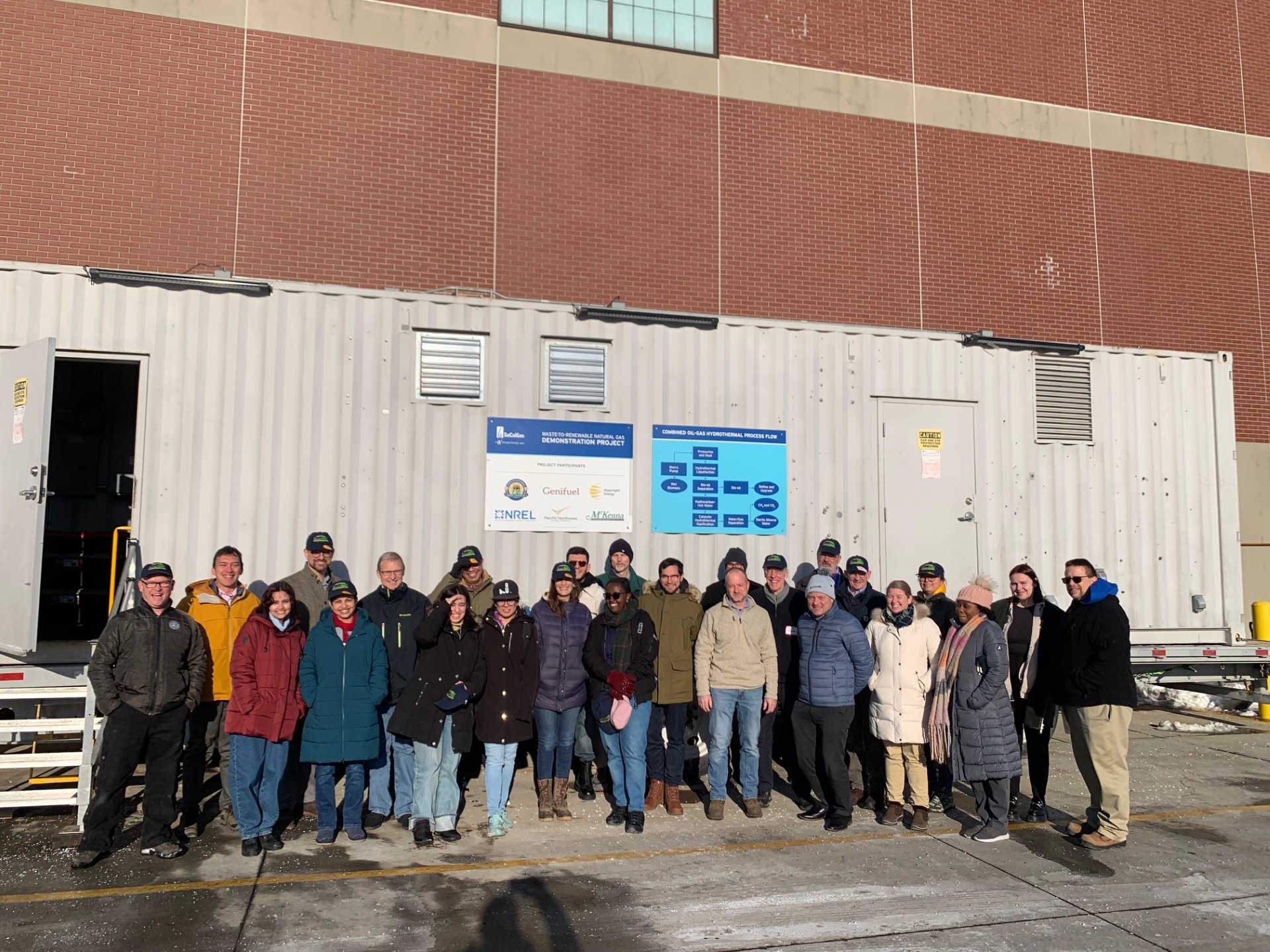
This study is a collaborative effort between the SWR₂L, the Great Lakes Water Authority, Pacific Northwest National Lab, Brown and Caldwell, Genifuel, and two academic institutions: the University of Michigan and Wayne State University. Our goal is to measure the sustainability of hydrothermal liquefaction for treating sewage sludge. To achieve this, we are performing a life cycle assessment, a techno‑economic analysis, and considering social aspects through interaction with the Delray community, a neighborhood located near the Water Resource Recovery Facility. Additionally, we are actively testing the technology using Genifuel’s pilot unit directly at the water resource recovery facility.
Treatment & Resource Recovery from HTL Aqueous By‑product
Funding: U.S. Department of Energy, Water Research Foundation, The Great Lakes Water Authority
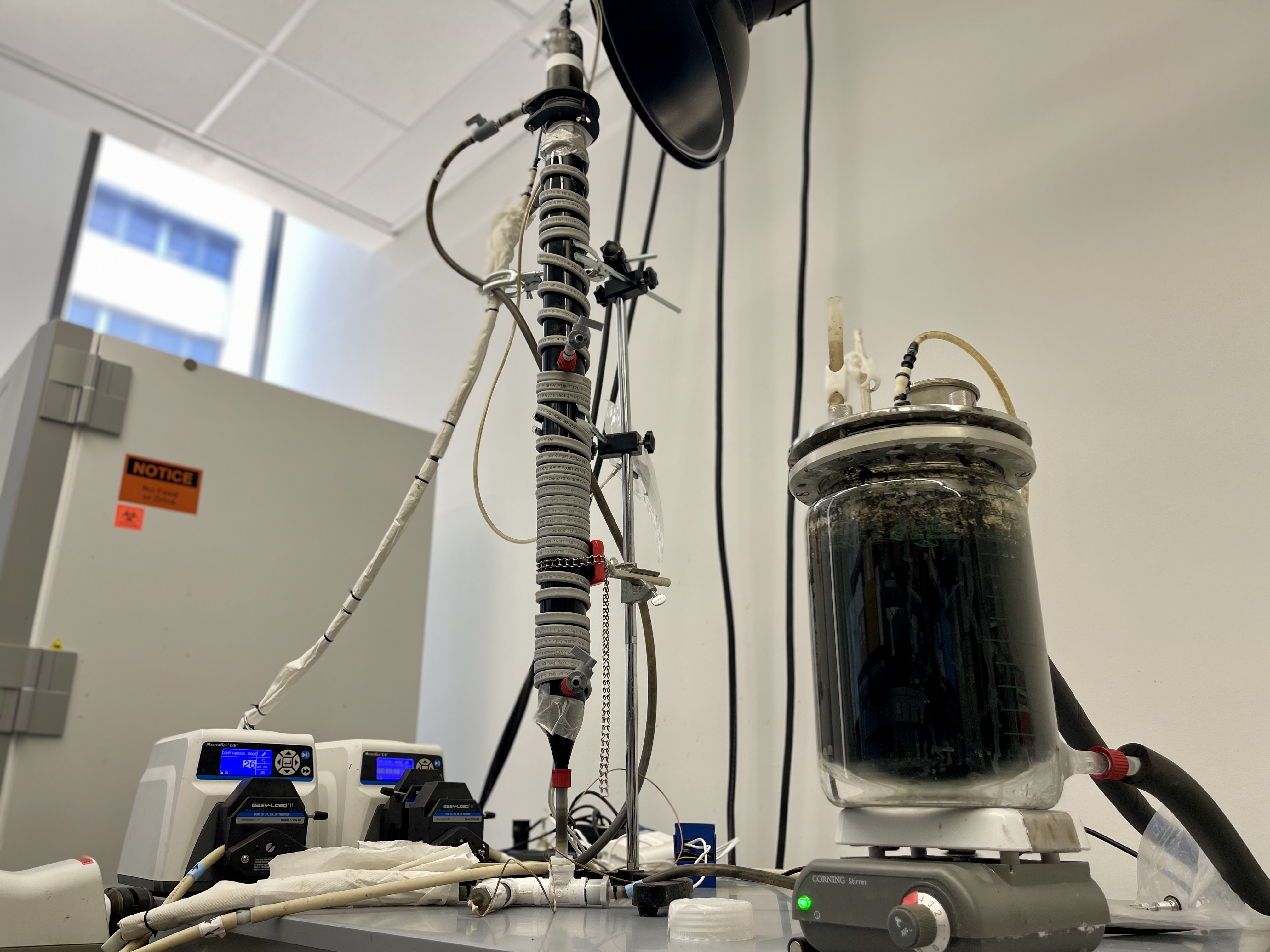
Hydrothermal Liquefaction (HTL) is a chemical process that converts organic wastes into biocrude, which serves as a precursor for transportation fuels. However, in addition to biocrude, HTL also generates a medium-to-high strength aqueous byproduct (HTL‑aq). For HTL to be successfully implemented, the treatment of HTL-aq must be well understood and sustainable. Under this project, we are employing anaerobic digestion and chemical processes to recover both biogas and ammonia from the HTL‑aq. Furthermore, we are evaluating the treatment of HTL‑aq in bioreactors designed to simulate the activated sludge processes typically found in water resource recovery facilities.
Evaluating Transformation and Fate of PFAS during Hydrothermal Liquefaction of Sewage Sludge
Funding: U.S. Department of Energy
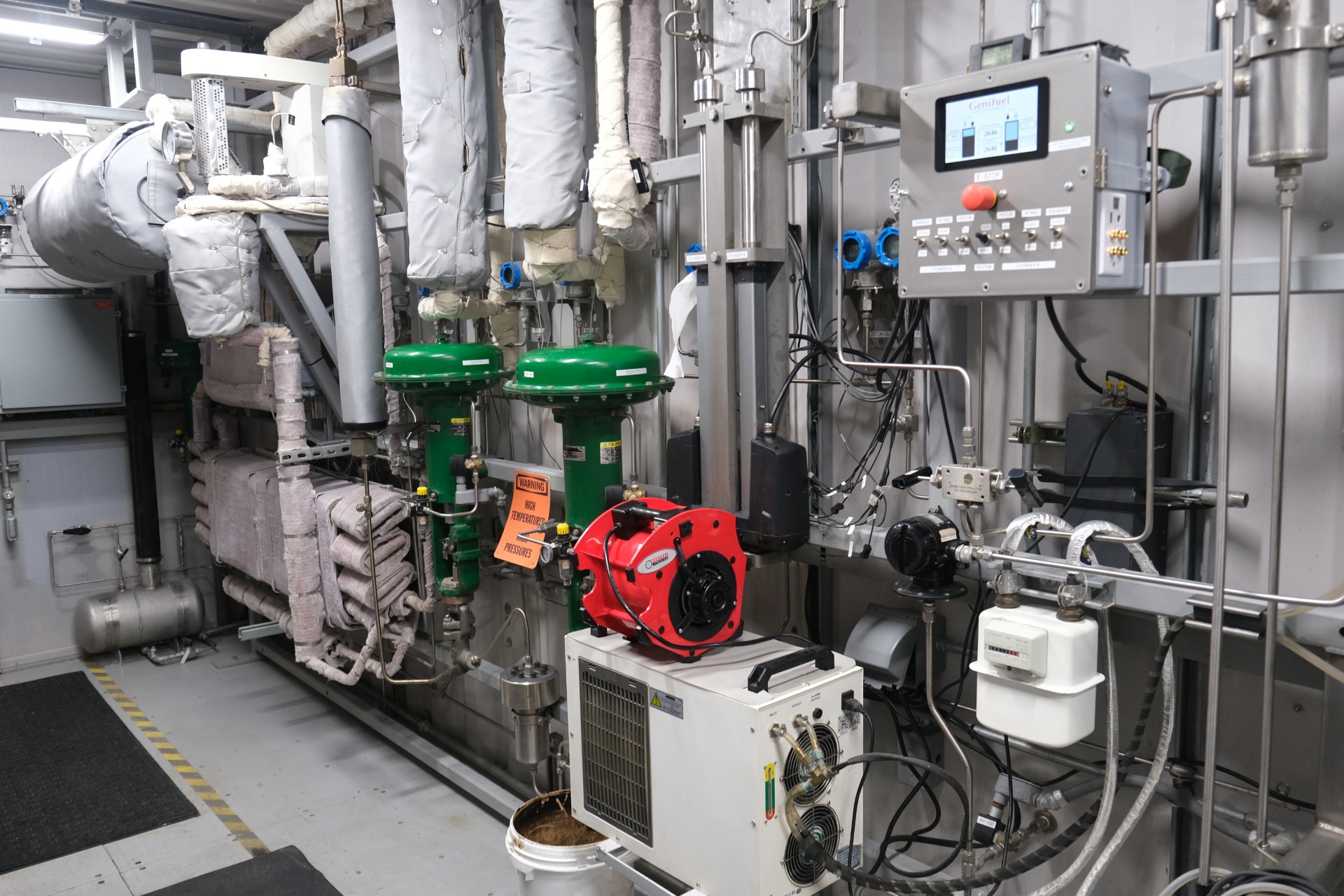
Per‑ and polyfluoroalkyl substances (PFAS) are emerging contaminants that threaten the application of biosolids for agricultural purposes. Hydrothermal Liquefaction (HTL) could offer a promising solution for the removal of PFAS. For this project, we are evaluating the transformation and fate of PFAS within a pilot‑scale, continuous HTL reactor provided by Genifuel. We are measuring PFAS concentrations in the influent, as well as in all the effluents produced by the HTL process, including biocrude, gas, liquid, and solid effluents.
Evaluating Nitrification Inhibition by Propylene Glycol in Austin Water Resource Recovery Facility
Funding: City of Austin (AW)
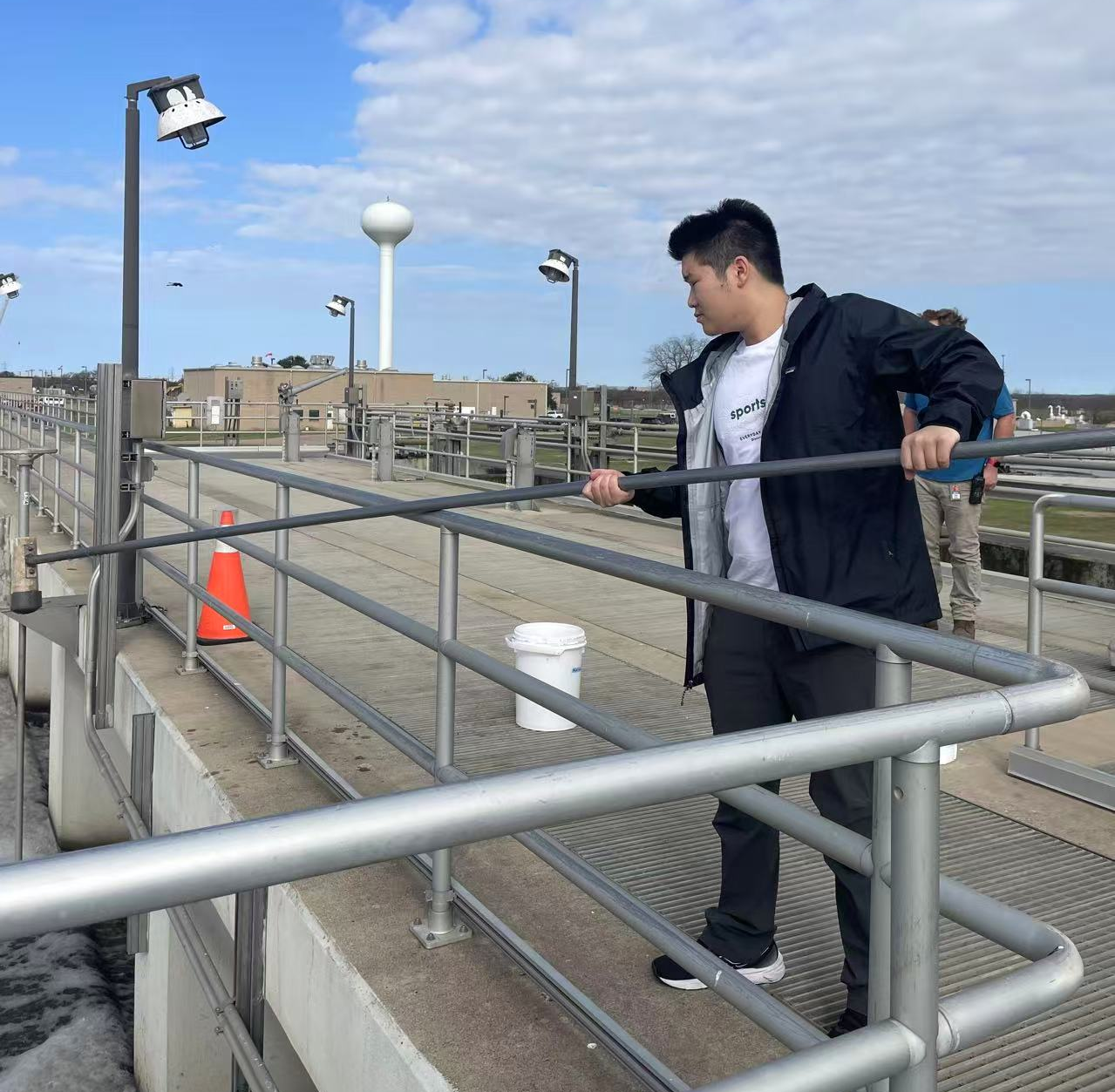
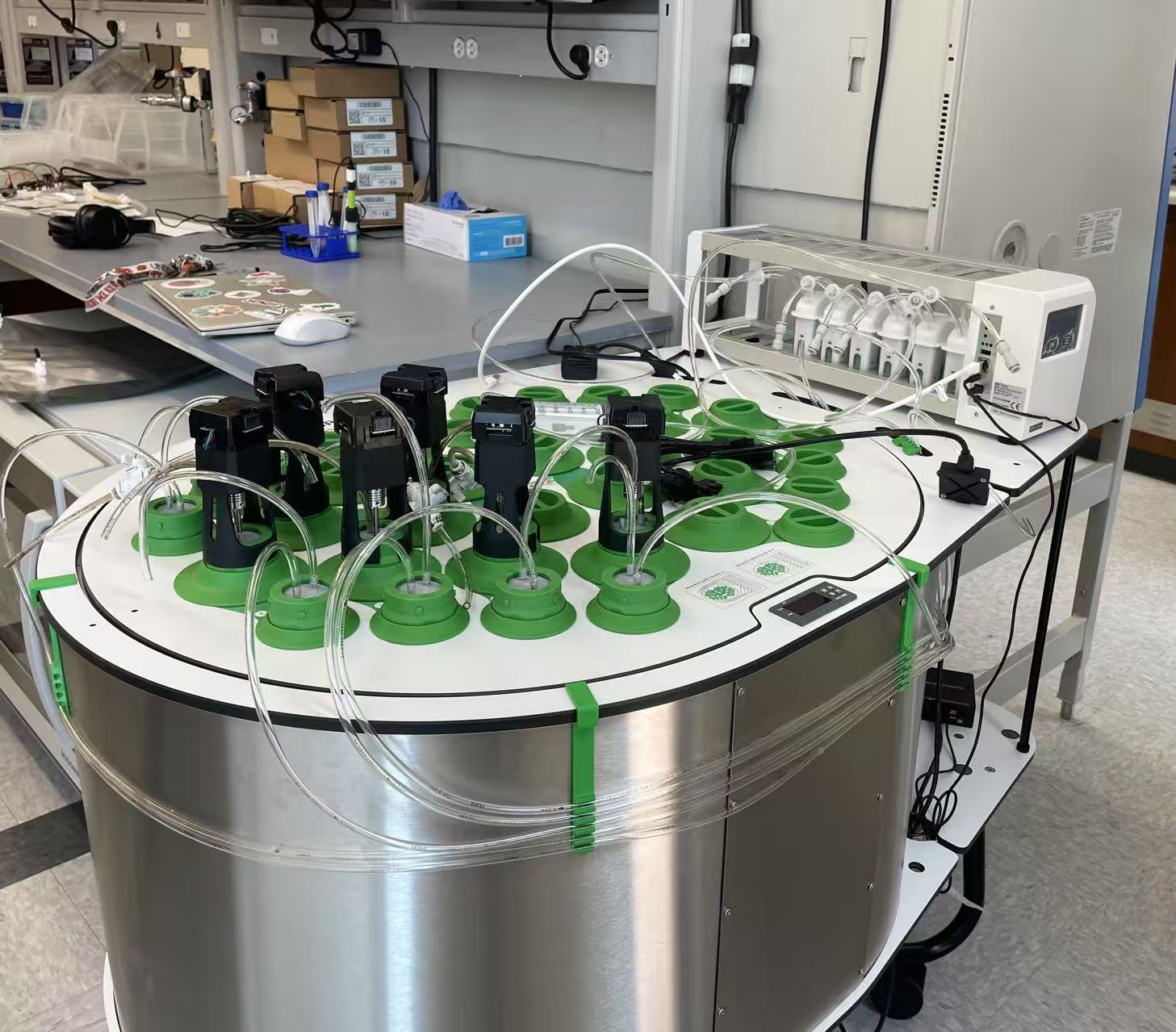
In this collaboration with Austin Water we are using bench‑scale bioreactors to simulate Austin Water secondary treatment and study the inhibition of nitrifying bacteria by propylene glycol.
Unleashing Anaerobic Fungi in Anaerobic Digestion
Funding: University of Texas at Austin
Lignocellulosic biomass is broadly available in the US and its conversion into biofuels or biomaterials through anaerobic digestion could increase US energy sources dramatically. However, the conversion of lignocellulose to biofuels requires costly and environmental damaging pretreatments to make plant material bioavailable. However, anaerobic fungi (phylum Neocallimastigomycota) are a possible solution and are inherently found in the rumen of ruminants, such as cows and sheep, where they digest plant material; we are working to develop bioprocesses that simulate the rumen to grow these fungi.